Welcome to the School of Materials Science and Engineering at Wuhan Institute of Technology
School Profile
Established in 1998, the School of Materials Science and Engineering was designated as one of the first pilot reform schools in Hubei Province in 2013. In the Fourth National Discipline Assessment in 2017, the Materials Science and Engineering discipline was rated C+, ranking joint second among provincial universities in Hubei. In 2018, Materials Science entered the top 1% globally in ESI rankings, followed by Engineering in 2019. That same year, Materials Science and Engineering was listed in both the ShanghaiRanking and U.S. News global rankings of top disciplines.
The school offers a complete, high-quality talent cultivation system for undergraduates, master’s, and doctoral students, and is authorized to recommend undergraduate students for direct admission to postgraduate programs without examination. It offers five undergraduate programs: Polymer Materials and Engineering, Inorganic Non‑metallic Materials Engineering, Materials Physics, Materials Chemistry, and New Energy Materials and Devices. Additionally, it holds authorization to confer both master’s and doctoral degrees in the first‑level discipline of Materials Science and Engineering.
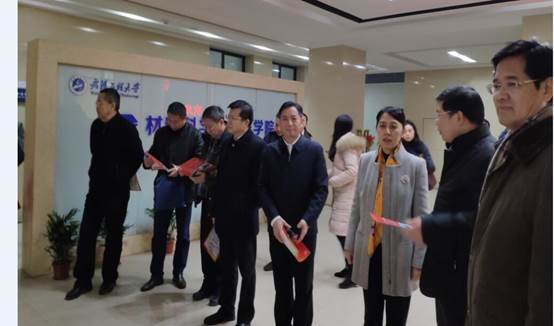
Provincial Leaders Visit School to Guide Development of World-Class Disciplines
Faculty Strength
The School has assembled a distinguished faculty team, built upon key groups such as the “Hubei Provincial Natural Science Foundation Innovation Group,” the “Hubei Provincial Department of Education Outstanding Young and Middle-aged Innovation Team,” and the “Materials Science” academic innovation team. The faculty is characterized by exemplary ethics, rigorous scholarship, and profound academic expertise.
Currently, the School has 89 full-time faculty members, including: 39 professors (including specially-appointed professors), 35 associate professors, 79 holding doctoral degrees, 26 with overseas study or research experience, 19 doctoral supervisors, 72 master’s supervisors, 1 expert receiving the State Council Special Government Allowance, 1 National Outstanding Teacher, Over 20 provincial and ministerial-level high-level talents. (Statistics as of May 2024)
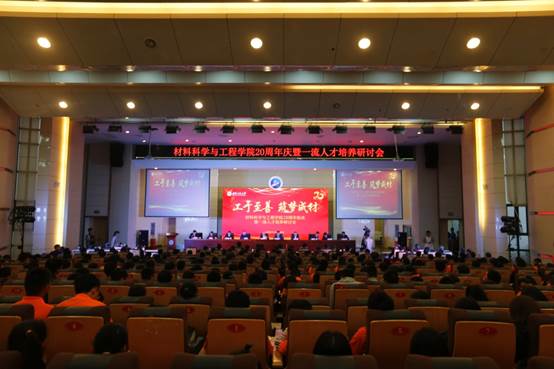
Five Academicians Participated in the School’s 20th Anniversary Celebration and Seminar on Cultivating Top Talents
Discipline Development
Since 2006, the discipline of Materials Science and Engineering has been successively recognized as a Hubei Provincial First‑Level Characteristic Discipline, a First‑Level Key Characteristic Discipline, and a Key Construction Discipline.
The School hosts five provincial‑level research platforms, including the Hubei Provincial Key Laboratory of Plasma Chemistry and New Materials, the Hubei Provincial Engineering Technology Center for Environmental Materials and Membrane Technology, and the Hubei Provincial Engineering Technology Research Center for Optoelectronic and New Energy Materials. It also co‑operates the National Engineering Research Center for Phosphorus Resources Development and Utilization, the Ministry of Education Key Laboratory of Green Chemical Engineering Process, and the Ministry of Education Engineering Research Center for Phosphorus Resources Development and Utilization.
Stable research directions have been established, covering advanced plasma technology and applications, separation membrane materials and application technology, special polymer materials, biomedical materials, new energy materials and devices, among others. Among these, the School leads domestically in the development and application of microwave plasma technology. The research achievements of the silicon carbide ceramic membrane team were successfully industrialized in 2017, becoming the University’s first technology transfer project with a commercialization value exceeding ten million yuan. This accomplishment has been reported multiple times by mainstream media such as CCTV Finance Channel, Xinhua News Agency, and People’s Daily.
In the past five years, the School has secured over 20 national‑level projects, including those under the National Key R&D Program and the National Natural Science Foundation, as well as more than 30 provincial/ministerial‑level vertical projects. Annual research funding has averaged nearly 10 million yuan.
Over the same period, the School has received: 1 National Technology Invention Second Prize, 1 Hubei Provincial Science and Technology Progress First Prize, 1 China Petroleum and Chemical Industry Association Science and Technology Progress First Prize, 2 Hubei Provincial Science and Technology Progress Second Prizes, 2 Hubei Provincial Technology Invention Second Prizes, 3 Hubei Provincial Science and Technology Progress Third Prizes, 1 Hubei Provincial Natural Science Third Prize.
Additionally, 228 national invention patents have been authorized, with more than 20 transferred into practical applications. More than 500 papers have been published, of which over 420 are indexed by SCI or EI.
The industrialization achievements of our school’s scientific research outcomes have been repeatedly reported by authoritative media such as China Central Television (CCTV).
Talent Cultivation
The School currently has over 1,800 undergraduate students and more than 300 master's and doctoral students. Several of its undergraduate programs are recognized as National First-Class Undergraduate Programs, National Characteristic Specialties, Hubei Provincial Undergraduate Brand Programs, programs under the Hubei Higher Education Strategic Emerging (Pillar) Industry Talent Cultivation Plan, programs under the Hubei “Jingchu Excellence” Collaborative Education Plan, or Hubei Provincial Comprehensive Reform Pilot Programs. The School implements broad-category enrollment and categorized cultivation, assigns academic mentors to undergraduate students, and optimizes the entire talent cultivation process with a quality-oriented engineering education philosophy. Emphasizing student-centeredness, demand-driven approaches, and innovation-driven reform, it has carried out diversified reforms in talent cultivation models. In the past three years, students from the School have won nearly 100 awards at or above the provincial level in competitions such as the “Challenge Cup” National College Students’ Extracurricular Academic Science and Technology Works Competition, the National College Students’ Energy Conservation and Emission Reduction Social Practice and Science and Technology Competition, and the National College Students’ Polymer Materials Innovation and Entrepreneurship Competition. Undergraduate students have published over 90 research papers publicly. Outstanding student representatives have emerged, including Jia Xin, honored as a National Model Individual for Practicing Socialist Core Values; Song Zhiyu, selected as one of the Top 20 National KAB Entrepreneurship Club Chairs; and Bo Jinyu, author of high-impact SCI papers. The postgraduate admission rate for undergraduates has remained consistently above 35%, and the initial employment rate has stabilized at over 95%. Graduates are highly sought after by employers, earning the university a strong social reputation.
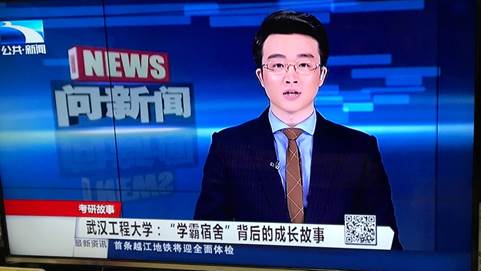
The achievements in talent cultivation of the School repeatedly reported by media outlets such as Hubei Provincial Television
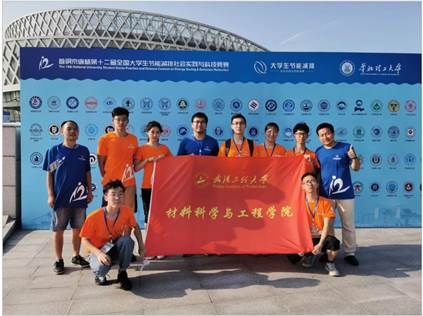
Undergraduate students from our School have won the first prize in the National College Students’ Energy Conservation and Emission Reduction Social Practice and Science and Technology Competition.
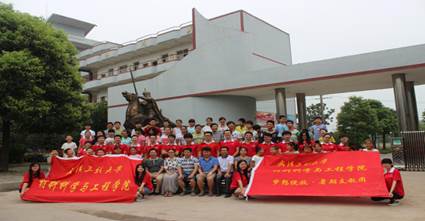
The “Blooming Dreams, Chibi Teaching Volunteer” summer social practice team has been recognized multiple times by the Central Committee of the Communist Youth League of China
Program Introduction
Materials Science & Engineering (Polymer Materials and Engineering)
Program Duration: 4 years
Degree Conferred: Bachelor of Engineering
Educational Objectives:This program is designed to cultivate application-oriented research talents who can meet the needs of regional economic development. Graduates will possess a systematic and solid foundation in polymer materials and engineering, strong social responsibility and professional ethics, excellent humanities literacy, teamwork spirit, and good physical and mental health. They will recognize and abide by the concept of sustainable development, have an international perspective and a certain sense of innovation, and be capable of analyzing and solving complex engineering problems in polymer materials and related fields. Graduates will be competent for scientific research, technological development, process design, production, and operation management in the areas of polymer material design, synthesis, modification, processing and molding, and application. Based on disciplinary characteristics and social needs, the program offers three specialized tracks: Polymer Synthesis and Processing, Packaging Materials and Technology, and Plastic Molding and Mold Design.
Program Features:It is a National First-Class Undergraduate Program, a National Characteristic Major, a Hubei Provincial Brand Undergraduate Program, a Major under the Hubei Provincial Strategic Emerging (Pillar) Industry Talent Training Program, and a Pilot Major for Comprehensive Professional Reform in Hubei Province. In June 2019, it passed the Engineering Education Accreditation of the Ministry of Education. The program sets up an Elite Class for Outstanding Talents in Polymer Materials and Engineering – the Innovation Class. Over the past three years, the average postgraduate entrance examination qualification rate of the program has reached 48.06%, with most of the qualified students pursuing further studies in 985 and 211 universities. In 2018, the Higher Education Communication and Public Opinion Monitoring Research Center of Communication University of China released the “2018 Undergraduate Program Social Influence Ranking”, where this program ranked 14th nationwide.
Core Courses (Major Disciplines)
Basic Courses: Advanced Mathematics, College Physics, General Chemistry, Organic Chemistry, Physical Chemistry, etc.
Professional Basic Courses: Fundamentals of Materials Science, Polymer Chemistry, Polymer Physics, Principles of Polymer Processing, Materials Research and Testing Methods, Materials Science and Technology English, Experiments in Polymer Chemistry and Physics, Specialized Experiments in Polymer Materials.
Specialized Track Courses: Engineering Design CAD, Polymerization Reaction Engineering, Packaging Technology, Mold Materials and Manufacturing, etc.
Materials Science & Engineering (Inorganic Nonmetallic Materials Engineering)
Program Duration: 4 years
Degree Conferred: Bachelor of Engineering
Educational Objectives: This program aims to cultivate senior engineering and technical talents who can meet the development needs of national and Hubei’s economy and society. Graduates will master the basic theories of materials science and engineering and related disciplines as well as professional knowledge in inorganic nonmetallic materials engineering. They will be capable of engaging in new product and technology R&D, production management, and process design in the fields of preparation, processing, compounding, and application of inorganic nonmetallic materials. In accordance with the development trend of China's materials industry, the program offers two specialized tracks: Advanced Inorganic Materials and Green Building Materials.
Program Features: It is a Hubei Provincial First-Class Undergraduate Program, a Hubei Provincial Brand Undergraduate Program, and a Pilot Major for Comprehensive Professional Reform in Hubei Province. The program boasts a highly qualified teaching team with noble morality, high academic qualifications, senior professional titles, excellent professional capabilities, and strong teamwork spirit. Students conduct scientific research and engineering practice training relying on the Hubei Provincial Engineering Technology Research Center for Environmental Materials and Membrane Technology, the National Engineering Technology Research Center for Phosphorus Resource Development and Utilization, and Hubei Provincial Demonstrative Practice Teaching Bases. Graduates are in high demand in Hubei Province and the developed coastal areas in southeast China, enjoying an excellent social reputation for a long time.
Discipline-based basic courses are designed based on the first-level discipline of Materials Science and Engineering, among which Fundamentals of Materials Science has been developed into a Hubei Provincial Excellent Course and an Online Open Course.
Practice-oriented: Professional practical training including specialized experiments, internships, and design projects starts from the sophomore year and continues throughout the undergraduate studies, with the entire senior year dedicated to practical teaching.
Broad-ranging: Core professional courses cover major areas of inorganic nonmetallic materials such as ceramics, glass, cement, and concrete.
Development-driven: Specialized track courses focus on the development trend of the inorganic nonmetallic materials industry. Three courses are taught in bilingual mode: Introduction to Materials Science and Engineering, Materials Research and Testing Methods, and Green Building Materials.
Courses with Examination Reform: Inorganic Nonmetallic Materials Engineering and Fundamentals of Materials Science.
Courses with Teaching Mode Reform: Fundamentals of Materials Engineering and Thermal Equipment.
Core Courses (Major Disciplines)
Basic Courses: Advanced Mathematics, College Physics, General Chemistry, Physical Chemistry.
Professional Basic Courses: Fundamentals of Materials Science, Fundamentals of Materials Engineering, Inorganic Nonmetallic Materials Engineering, Materials Research and Testing Methods, Physical Properties of Materials, Thermal Equipment, Plant Design of Inorganic Nonmetallic Materials, Materials Technology Experiments.
Specialized Track Courses: Electronic Ceramics Technology, Green Building Materials.
Materials Science & Engineering (Materials Physics)
Program Duration: 4 years
Degree Conferred: Bachelor of Science
Educational Objectives:This program is committed to cultivating senior engineering and technical talents who can meet the development needs of national and Hubei's economy and society. Graduates will have a solid grasp of the basic theories of materials science and engineering, materials physics, and related disciplines, and possess basic capabilities in functional thin film material design, preparation, and analysis and testing. They will have technical expertise in the fields of functional thin film materials, plasma technology, nanomaterials, and electronic devices, and be innovative and capable of engaging in R&D of new semiconductor materials and electronic devices, as well as design, assembly, and production management of industrial plasma equipment. The program offers two specialized tracks: Functional Thin Film Materials and Plasma Technology and Electronic Devices. After graduation, students are suitable for pursuing postgraduate studies in materials science and related high-tech and interdisciplinary disciplines. They can also work in scientific research, development, teaching, and management in large and medium-sized enterprises, research institutions, universities, and testing organizations.
Program Features: It is among the first batch of majors selected into the Hubei Provincial Strategic Emerging (Pillar) Industry Talent Training Program, focusing on the optoelectronic materials and new energy industries. The discipline to which this program belongs is a provincial key discipline and one of the first batch of provincial characteristic disciplines, with the right to confer doctoral and master’s degrees in the first-level discipline of Materials Science and Engineering. The program has a strong teaching faculty, with a distinguished professor position of “Chutian Scholars”. Professors and associate professors account for 80% of the total teaching staff. Relying on the Hubei Provincial Key Laboratory of Plasma Chemistry and Advanced Materials and the Hubei Provincial Engineering Research Center for Microwave Plasma Application Technology, the program cultivates students’ capabilities in application research and development of optoelectronic materials, functional thin film material design and manufacturing, and plasma technology (Note: Plasma technology is a core technology essential for the preparation of various chips, microelectronic and optoelectronic devices, and new functional thin film materials).
Core Courses (Major Disciplines):The main courses include: College Physics, Advanced Mathematics, Solid State Physics, Fundamentals of Materials Science, Materials Physics, Nanomaterials and Technology, Materials Research and Testing Methods, Principles of Industrial Plasma, Electronic Materials and Devices, Surface Processing Technology, Thin Film Preparation Technology, Principles and Design of Optical Thin Films, Functional Materials, Semiconductor Devices, etc. Through course learning and basic skill training, students receive systematic training in scientific thinking and scientific experiments, enabling them to engage in research, management, and technological development in materials science and engineering and related fields.
Materials Science & Engineering (Materials Chemistry)
Program Duration: 4 years
Degree Conferred: Bachelor of Engineering
Educational Objectives: The Materials Chemistry program aims to cultivate high-level application-oriented talents with strong social responsibility, teamwork spirit, and innovative thinking. Graduates will possess a solid foundation in materials science and chemistry theories and proficient experimental skills, and systematically master the skills of functional material design, preparation, performance testing, and application. They will be competent for scientific research, technological development, and related management work in fields such as new energy materials, functional polymer materials, petrochemical materials, biomedical materials, and composite materials.
Program Features:The program is supported by the first-level key discipline, doctoral program, and master’s program of Materials Science and Engineering (engineering), as well as the second-level key discipline and master's program of Polymer Chemistry and Physics (science). It has jointly established a 2+2 Sino-foreign exchange program in Materials Chemistry with Queensland University of Technology in Australia, and the International College and School of Foreign Languages of Wuhan Institute of Technology. In 2017, the program was awarded the Hubei Provincial “ingchu Outstanding Engineers” Collaborative Education Program. Centering on the talent training model of "application-oriented, interdisciplinary, and international", the program actively carries out the school-enterprise cooperative 3+1 talent training model and the 2+2 Sino-foreign cooperative education model.
Core Courses (Major Disciplines):General Chemistry, Physical Chemistry, Organic Chemistry, Fundamentals of Materials Science, Principles of Chemical Engineering, Materials Chemistry, Polymer Chemistry, Polymer Physics, Materials Research and Testing Methods, Materials Spectroscopy Analysis, Composite Materials Science, Functional Materials Science, New Energy Materials, etc.
Materials Science & Engineering (New Energy Materials and Devices)
Program Duration: 4 years
Degree Conferred: Bachelor of Engineering
Educational Objectives:This program cultivates high-quality interdisciplinary engineering and technical talents with all-round development of morality, intelligence, physical fitness, and aesthetics. Graduates will have a solid foundation in materials science as well as physics, chemistry, electronics, mechanics, and other related disciplines. They will possess basic theoretical knowledge, engineering practice capabilities, and innovation and entrepreneurship qualities required for work in production and design, testing and evaluation, and system and engineering related to new energy materials and devices. The program meets the talent needs of research institutions and enterprises in national strategic emerging industries such as new energy, new materials, energy conservation and environmental protection, and high-end equipment manufacturing, as well as engineering fields including electric power, aerospace, information technology, and transportation, for professionals engaged in production and manufacturing, scientific research, technological development, process and device design of new energy materials and devices.
Program Features:Demand-driven Talent Training: Guided by the needs of national strategic emerging industries such as new energy, new materials, energy conservation and environmental protection, and high-end equipment manufacturing, and adapted to local economic development and industrial transformation and upgrading, graduates are in short supply.
Integrated Curriculum Design: Aimed at cultivating all-round interdisciplinary engineering and technical talents in new energy materials and devices, the curriculum is based on materials science-related courses, focused on engineering practice capability training, and supported by new energy materials and devices-related courses, effectively ensuring the quality of talent training.
Superior School-running Conditions: Relying on the university's materials discipline, which ranks among the top 1% in ESI globally, and the Hubei Provincial First-level Key Characteristic Discipline, the program has the Hubei Provincial Engineering Technology Research Center for Optoelectronic and New Energy Materials, and holds the right to confer doctoral and master’s degrees in the first-level discipline of Materials Science and Engineering.
Core Courses (Major Disciplines)
Basic Courses: Advanced Mathematics, College Physics, General Chemistry, Physical Chemistry, Fundamentals of Mechanical Design, etc.
Professional Basic Courses: Fundamentals of Materials Science, Physical Properties of Materials, Chemical Properties of Materials, Fundamentals of Semiconductor Physics, Semiconductor Photoelectrochemistry, Materials Analysis and Testing Technology, Preparation Technology of New Energy Materials and Devices, etc.
Specialized Track Courses: New Energy Structural Materials, Energy Storage Materials and Devices, Solar Cell Materials and Devices, etc.
Introduction to Characteristic Enrollment Programs
Materials Chemistry (Minor in English)
Program Duration: 4 years
Degree Conferred: Bachelor of Engineering
Educational Objectives: Through the integrated talent training model of “Materials Chemistry + English” double majors, the program achieves the goal of cultivating talents with “high quality, strong foreign language proficiency, and solid professional skills”. Graduates will have English proficiency as the foundation and materials chemistry as the development direction, with a solid foundation in natural sciences, good comprehensive English application skills, solid and extensive professional knowledge in materials chemistry, strong scientific innovation thinking ability, practical ability, and good international academic communication ability. They will be competent for engineering design, technological development, production, operation management, and scientific research in fields such as chemical engineering, pharmaceuticals, light industry, metallurgy, functional materials, environmental protection, bioengineering, new energy, and military industry, becoming international interdisciplinary talents.
Program Features:The program is supported by the first-level key discipline, doctoral program, and master’s program of Materials Science and Engineering (engineering), and the second-level key discipline and master’s program of Polymer Chemistry and Physics (science). It is also a recipient of the Hubei Provincial “Jingchu Outstanding Engineers” Collaborative Education Program. Centering on the talent training concept of “two majors, one training plan” and the integrated talent training model of “English + Materials Chemistry” double majors, the program jointly cultivates international innovative interdisciplinary talents with excellent professional quality and English proficiency with the School of Foreign Languages of Wuhan Institute of Technology. Meanwhile, it has established cooperation with overseas universities such as Queensland University of Technology and The University of Queensland in Australia, providing students with more opportunities to study abroad while obtaining double degrees.
Polymer Materials and Engineering (Advanced Materials Design and Intelligent Molding Class)
Program Duration: 4 years
Degree Conferred: Bachelor of Engineering
Educational Objectives: This program aims to cultivate high-quality application-oriented research talents who can meet the needs of regional economic development. Graduates will possess a solid theoretical foundation in polymer materials engineering and excellent practical ability, proficient foreign language and computer application skills, strong autonomous learning ability, teamwork spirit, innovation awareness, international perspective, and the concept of sustainable development. They will also have good humanistic accomplishment, social responsibility, and professional ethics. Graduates will be capable of engaging in scientific research, technical support and process design, production and operation management in fields related to advanced materials development and intelligent molding.
Program Features: Advanced Materials Development and Intelligent Production: Relying on the National First-Class Undergraduate Program of Polymer Materials and Engineering and 6 provincial and ministerial-level scientific and technological platforms, the enrollment program integrates material preparation and design processes with computer-aided/simulation tools based on new-generation information technology to realize intelligent, precise, and personalized material production and development.
Innovative 2+1+1 Teaching Model: The curriculum system is constructed in accordance with the mode of “Materials Science Platform (freshman and sophomore years) + Professional Track (junior year) + Project-based Practice (senior year)”. In the first two years, students take platform courses of materials science and also basic courses of intelligent material manufacturing. In the junior year, while studying the core courses of polymer materials and engineering, students also take courses in intelligent molding, material computation and design, 3D printing, and other related tracks. In the senior year, students' practical ability is cultivated through project-based practice, where they can independently choose their practice direction. In courses such as professional practice and graduation thesis, students complete practical courses under the guidance of supervisors in a project-based manner, strengthening their autonomous learning and practical operation capabilities.
Inorganic Nonmetallic Materials Engineering (Advanced Materials Talents Class)
Program Duration: 4 years
Degree Conferred: Bachelor of Engineering
Educational Objectives:This program cultivates high-quality talents who can meet the development needs of national and Hubei’s economy and society. Graduates will have good humanities and social science literacy and strong social responsibility, mastering the basic theories of materials science and engineering and related disciplines as well as professional knowledge in advanced inorganic materials. They will possess good communication, organization and management, and lifelong learning abilities, and be capable of engaging in scientific research, technological development, engineering design, test and analysis, production and operation management in advanced inorganic materials and related fields.
Program Features: Guided by the advanced materials needs of high-tech fields such as optoelectronic information, which are prioritized for development by the state and Hubei Province, the program adopts a full tutor system, personalized training, and all-round education. Each student is assigned a supervisor with noble morality and high academic level, including professors and doctors, under whose guidance students conduct scientific research and innovation and entrepreneurship training. Teaching students in accordance with their aptitude, supervisors guide students to complete academic planning and achieve personal growth based on their interests and strengths. Relying on the Hubei Provincial First-Class Program, the program fully utilizes the university's high-quality scientific research and practical platforms such as national and provincial engineering technology research centers, key laboratories, and provincial practice teaching bases, comprehensively improving students' comprehensive quality and practical ability.
Materials Chemistry (Excellence Class)
Program Duration: 4 years
Degree Conferred: Bachelor of Engineering
Educational Objectives:This program cultivates high-quality outstanding engineers with all-round development of morality, intelligence, physical fitness, aesthetics, and labor education, who possess both basic theoretical knowledge and applied practical ability in materials science and chemistry, and can adapt to the needs of market economy development. Graduates will have solid foundations, broad knowledge, and strong practical and innovative capabilities, being competent for scientific research, technological development, production and operation in fields such as electronic and electrical engineering, new energy, petrochemicals, biomedicine, as well as teaching and management in related fields.
Program Features:The program implements the 3+1 undergraduate training model (3 years of theoretical teaching + 1 year of practical teaching). The curriculum system is constructed based on the “platform + module” model, focusing on quality development and practical ability training. Teaching methods such as the school-enterprise dual-tutor system, guided credit system, industry-education integration system, and seminar and report system are adopted, highlighting student-centered education and strengthening the cultivation of students' active learning and practical abilities.