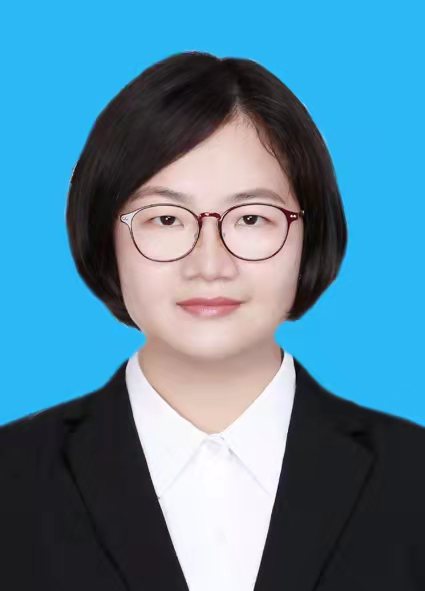
姓名:吴丹
职称:特聘教授
博导:是
硕导:是
邮箱:wudan@wit.edu.cn(QQ17687807)
地址:武汉工程大学流芳校区大化工楼1611室
课题组主页:https://www.x-mol.com/groups/WIT_EACC
教育及工作经历
2022年-今,武汉工程大学,材料科学与工程学院,特聘教授,博士生导师
2018年-2021年,深圳大学,材料科学与工程学院,副研究员
2016年-2017年,香港中文大学,生命科学院,助理研究员/博士后
2013年-2016年,香港中文大学,环境学专业,博士学位
2010年-2013年,华中科技大学,材料学专业,硕士学位(免试保送)
2006年-2010年,武汉大学,包装工程专业,学士学位
研究方向
(1)能源小分子电催化转化与碳捕获:电催化CO2还原、电解水制氢
(2)废弃碳资源电化学转化技术:生物质/塑料/地沟油等高值化转化
(3)材料表界面化学
主讲课程
高分子材料环境保护与可持续发展(本科生)、高分子材料导论(本科生)
腐蚀与防护(研究生)、研究生科技英语写作(研究生)
学生培养
EACC课题组从事新能源材料与器件研究,PI吴丹入选湖北省“BR计划”省级人才计划。EACC在读博士研究生3名,硕士研究生10名。每年招收博士研究生1-2名,硕士研究生5-8名,可与深圳大学高水平课题组联合培养;欢迎对科学研究有兴趣学有余力的优秀本科生进入课题组学习;同时也欢迎师资博士后入站合作(与国家级人才课题组联培)。(咨询QQ:17687807)
1、2025:
(1)蒋铭坤(2024级博士生)获博士研究生国家奖学金;
(2)何语馨(2024级研究生)获武汉工程大学第十七届研究生教育创新基金立项;
(3)张静怡(2024级研究生)获武汉工程大学第十七届研究生教育创新基金立项;
(4)龚学海(2022级本科生)获大学生创新创业训练计划项目立项,国家级;获第十五届“挑战杯”大学生课外学术科技作品竞赛,湖北省省级一等奖;获第十届全国大学生生命科学竞赛,国家级一等奖;保送中南大学;
(5)任瑞鑫(2022级本科生)获第十届全国大学生生命科学竞赛,国家级三等奖;湖北省大学生生物实验技能竞赛,省级二等奖;
(6)张艳阳(2023级本科生)获大学生创新创业训练计划项目省级推荐;
2、2024:
(1)王宇杰(2023级研究生)获武汉工程大学第十六届研究生教育创新基金,顺利结题
(2)杨洋(2023级研究生)获武汉工程大学第十六届研究生教育创新基金,顺利结题
(3)席万龙(2022级研究生)获硕士研究生国家奖学金
(4)蒋铭坤(2021级研究生)获评校优秀毕业生,学位论文获评校优秀硕士论文
(5)龚学海(2022级本科生)获武汉工程大学第十八期大学生校长基金,顺利结题
(6)刘思宇(2022级本科生)获武汉工程大学第十八期大学生校长基金,顺利结题
(7)陈冠生(2021级本科生)获大学生创新创业训练计划项目,省级,结项优秀;保送北京化工大学
(8)黄 露(2022级本科生)获大学生创新创业训练计划项目,省级,结项优秀;保送中国人民大学
3、2023:
(1)席万龙(2022级研究生)获武汉工程大学第十五届研究生教育创新基金,顺利结题
科研项目
1. 先进能源材料化学教育部重点实验室开放基金,2026-2027,主持。
2. 校企研发项目:高性能防腐不粘涂层制备技术与应用,2025-2027,主持。
3. 国家自然科学基金青年项目,2025-2027,主持。
4. 武汉工程大学校内科学基金项目,2024-2027,主持。
5. 湖北省自然科学基项目,2023-2025,主持,已结题。
6. 武汉工程大学校内科学基金项目,2022-2024,主持,已结题。
7. 武汉工程大学第三层次人才启动基金,2022-2026,主持。
8. 深圳市有关海外人才团队项目,2020-2025,子课题主持,已结题。
荣誉获奖
2022-至今:
1. 2025年:全球前2%顶尖科学家榜单(美国斯坦福大学联合Elsevier发布);武汉工程大学“优秀班主任”;武汉工程大学第五届高校教师教学创新大赛二等奖;第十届全国大学生生命科学竞赛优秀指导老师奖
2. 2024年:武汉工程大学“百佳导师”,2024年武汉工程大学优秀硕士学位论文指导教师
3. 2023年:全球前2%顶尖科学家榜单(美国斯坦福大学联合Elsevier发布),武汉工程大学“优秀班主任”
4. 2022年:湖北“BR计划”省级人才计划,江苏省第十批高层次人才科技副总
2022年之前:
1. 2020-2021年:深圳大学学年“先进个人”
2. 2019-2020年:深圳大学学年工作“考核优秀“奖
3. 2019年:深圳市南山区“领航人才”
4. 2018年:深圳市“孔雀计划”海外高层次人才
5. 2016年:香港中文大学生科院“研究生杰出学术成就奖”(第一名)
6. 2013-2014:香港中文大学生科院“优秀助教”
7. 2011年:华中科技大学“优秀学生干部”
8. 2010年:武汉大学“优秀本科毕业生”
代表性论文
2022年-今(所有文章学生均为第一作者):
1. J. Tian (2023级研究生), J. Zhang, D. Wu*. Tunable Cu@NC core-shell catalysts derived from PVP pyrolysis for enhanced C2+ formation in CO2 electroreduction. Appl. Surf. Sci., 2026, 731, 166429. (中科院2区,IF=6.9)
2. Y. Li (2025级博士生), et al. D. Wu*, Dual-site CuS-Co9S8 heterojunctions for efficient and selective glycerol electrooxidation. Chin. J. Catal. 2026, (中科院1区TOP,IF=17.7)
3. Y. Wang (2023级研究生), et al. D. Wu*, Active site decoupling via fluorine doping in spinel CuCo2O4 for concurrent selective glycerol electrooxidation and OER suppression. Sci. Chin. Chem. (中国科学×化学), 2026, (中科院1区TOP,IF=9.3)
4. L. Huang (2022级本科生), J. Tia, D. Wu*. Efficient and cost‑effective microplastic removal by electrocoagulation using upcycled aluminum anodes. Chem. Eng. Sci. 2026, 321, 122769. (中科院2区TOP,IF=4.3)
5. Y. Wang (2023级研究生), et al. D. Wu*, Plastic-derived carbons for high-performance battery electrodes: Upcycling, design strategies, and perspectives. Green Chem. 2025, 27, 13968 (中科院1区TOP,IF=9.3)
6. M. Jiang (2024级博士生), Y. Yang, D. Wu*. Closed-loop electro-upcycling of PET waste into formate and hydrogen via self-supported NiCo2O4 spinel arrays. Green Chem. 2025, 27, 9978 (中科院1区TOP,IF=9.3)
7. H. Huang (2023级研究生), J. Tian, D. Wu*. Dynamic valence engineering of CuOx catalysts for selective and stable CO2 electroreduction to ethylene and ethanol. Mater. Sci. Eng. R, 2025, 166, 101060. (中科院1区TOP,IF=31.6)
8. M. Jiang (2024级博士生), Y. Yang, D. Wu*. Energy-efficient electrocatalytic upcycling of post-consumer PET plastics into valuable chemicals and hydrogen over MOF-derived NiCo hydroxide nanosheets. Chem. Eng. Sci. 2025, 317, 122104. (中科院2区,IF=4.3)
9. Y. Yang (2023级研究生), M. Jiang, D. Wu*. Solvent-engineered NiMo-based electrocatalysts for simultaneous hydrogen evolution and PET plastic waste upcycling. Mater. Today Phys. 2025, 56, 10175. (中科院1区TOP,IF=9.7)
10. Y. Wang (2023级研究生), M. Jiang, D. Wu*. Stabilization strategies for bismuth-based anodes in sodium-ion batteries: From nanoscale engineering to carbon hybridization. Composites Part B: Eng., 2025, 302, 112538 (中科院1区TOP,IF=12.7)
11. J. Tian (2023级研究生), H. Huang, D. Wu*. Harnessing point defects for advanced Cu-based catalysts in electrochemical CO2 reduction. Mater. Sci. Eng. R, 2025, 164, 100979. (中科院1区TOP,IF=31.6)
12. P. Yang (2022级研究生), W. Xi, D. Wu*. Oxygen vacancy-enhanced CO2-to-HCOOH protonation and H2 suppression in Bi2O2CO3 electrocatalysts. J. Environ. Chem. Eng. 2025 (中科院2区,IF=7.4)
13. X. Wang (2021级研究生), T. Jia, D. Wu*. High-performance NiCoP/NF electrocatalysts for coupled methanol upgrading and hydrogen production. Sep. Purif. Technol. 2025, 361, 131603. (中科院1区TOP,IF=8.2)
14. Y. Wang (2023级研究生), X. Wang, D. Wu*. CoP-NiCoP heterojunction for enhanced bifunctional electrocatalysis in hydrogen evolution and methanol oxidation. Fuel 2025, 384, 134042. (中科院1区TOP,IF=6.5)
15. G. Chen (2021级本科生), X. Wang, D. Wu*. Trimetallic FeNiCo layered double hydroxide catalysts for industrial-level electrochemical glycerol upgrading. Chem. Eng. J. 2024, 501, 157435. (中科院1区TOP,IF=13.4)
16. W. Xi (2022级研究生), H. Zhou, D. Wu*. Pulse manipulation on Cu-based catalysts for electrochemical reduction of CO2. ACS Catal. 2024, 14, 13697−13722. (中科院1区TOP,IF=11.3)
17. H. Zhou (2022级研究生), W. Xi, D. Wu*. Electrolyte manipulation on Cu-based electrocatalysts for electrochemical CO2 reduction. J. Energy Chem. 2024, 99, 201-222. (中科院1区TOP,IF=14)
18. Y. Li (2025级博士研究生), H. Huang, D. Wu*. Advancements in transition bimetal catalysts for electrochemical 5-Hydroxymethylfurfural (HMF) oxidation. J. Energy Chem. 2024, 98, 24-46. (中科院1区TOP,IF=14) (高被引论文)
19. X. Wang (2021级研究生), M. Jiang, D. Wu*. Recent advances in pulsed electrochemical techniques: Synthesis of electrode materials and electrocatalytic reactions. Surf. Interfaces 2024, 20, 104519. (中科院2区,IF=5.8)
20. M. Jiang (2021级研究生), X. Wang, D. Wu*. Chemical catalytic upgrading of polyethylene terephthalate plastic waste into value-added materials, fuels and chemicals. Sci. Total Environ. 2024, 912, 169342. (中科院1区TOP,IF=9.8)
21. W. Xi (2022级研究生), P. Yang, D. Wu*. Electrochemical CO2 reduction coupled with alternative oxidation reactions: Electrocatalysts, electrolytes, and electrolyzers. Appl. Catal. B: Environ. 2024, 341, 123291. (中科院1区TOP,IF=22.1)(高被引论文)
22. M. Jiang (2021级研究生), X. Wang, D. Wu*. Upcycling plastic waste to carbon materials for electrochemical energy storage and conversion. Chem. Eng. J. 2023, 461, 141962. (中科院1区TOP,IF=16.7)
23. D. Wu, et al. Regulating the electron localization of metallic bismuth for boosting CO2 electroreduction. Nano-Micro Lett. 2022, 4, 38. (中科院1区TOP,IF=23.7)
24. X. Wang, Dan Wu(共同一作), et al. Densely packed ultrafine SnO2 nanoparticles grown on carbon cloth for selective CO2 reduction to formate. J. Energy Chem. 2022, 71,159–166. (中科院1区TOP,IF=13.6)
2015-2021年:
1. D. Wu+, et al. Energy-saving H2 generation coupled with oxidative alcohol refining over bimetallic phosphide Ni2P-CoP junction bifunctional electrocatalysts. ChemSusChem 2021, 14, 5450-5459. (中科院1区,IF=8.928)
2. D. Wu, et al. Ultrasmall Bi nanoparticles confined in carbon nanosheets as highly active and durable catalysts for CO2 electroreduction. Appl. Catal. B: Environ. 2021, 284, 119723. (中科院1区,IF=19.503)
3. D. Wu+, et al. All roads lead to Rome: An energy-saving integrated electrocatalytic CO2 reduction system for concurrent value-added formate production. Chem. Eng. J. 2021, 412, 127893. (中科院1区,IF=13.273)
4. D. Wu, et al. Highly efficient adhesion and inactivation of Escherichia coli on visible-light-driven amino-functionalized BiOBr hybrids. Environ. Res. 2021, 193, 110570. (中科院2区,IF=6.498)
5. X. Ren, et al., D. Wu*, B. Wang*. Insight into the tannic acid-based modular assembly strategy based on inorganic–biological hybrid systems: a material suitability, loading effect, and biocompatibility study. Mater. Chem. Front. 2021, 5, 3867-3876. (中科院1区,IF=6.482)
6. D. Wu, et al. Boosting formate production at high current density from CO2 electroreduction on defect-rich hierarchical mesoporous Bi/Bi2O3 junction nanosheets. Appl. Catal. B: Environ. 2020, 271, 118957. (中科院1区,IF=19.503)
7. D. Wu, et al. Metal-support interaction enhanced electrochemical reduction of CO2 to formate between graphene and Bi nanoparticles. J. CO2 Utiliz. 2020, 37, 353–359. (中科院2区,IF=7.132)
8. D. Wu, et al. Electrochemical exfoliation from an industrial ingot: ultrathin metallic bismuth nanosheets for excellent CO2 capture and electrocatalytic conversion. Nanoscale, 2019, 11, 22125. (中科院1区,IF=7.790)
9. D. Wu, et al. Electrochemical transformation of facet-controlled BiOI into mesoporous bismuth nanosheets for selective electrocatalytic reduction of CO2 to formic acid. ChemSusChem 2019, 12, 4700–4707. (中科院1区,IF=8.928)
10. D. Wu, et al. Organic-free synthesis of {001} facet dominated BiOBr nanosheets for selective photoreduction of CO2 to CO. Catal. Sci. Technol. 2017, 7, 265-271. (中科院2区,IF=6.119)
11. D. Wu, et al. Influence of photoinduced Bi-related self-doping on the photocatalytic activity of BiOBr nanosheets. Appl. Surf. Sci. 2017, 391, 516-524. (中科院1区,IF=6.707)
12. D. Wu, et al. Boron doped BiOBr nanosheets with enhanced photocatalytic inactivation of Escherichia coli. Appl. Catal. B: Environ. 2016, 192, 35-45. (中科院1区,IF=19.503)
13. D. Wu, et al. Visible-light-driven photocatalytic bacterial inactivation and the mechanism of zinc oxysulfide under LED light irradiation. J. Mater. Chem. A 2016, 4, 1052-1059. (中科院1区,IF=12.732)
14. D. Wu, et al. Alkali-induced in situ fabrication of Bi2O4-decorated BiOBr nanosheets with excellent photocatalytic performance. J. Phys. Chem. C 2016, 120, 7715-7727. (中科院2区,IF=4.126)
15. D. Wu, et al. Visible-light-driven BiOBr nanosheets for highly facet-dependent photocatalytic inactivation of Escherichia coli. J. Mater. Chem. A 2015, 3, 15148-15155. (中科院1区,IF=12.732)
16. D. Wu, et al. Mechanistic study of the visible-light-driven photocatalytic inactivation of bacteria by graphene oxide-zinc oxide composite. Appl. Surf. Sci. 2015, 358, 137-145. (中科院1区,IF=6.707)
发明专利
1. 吴丹,李昱伟,席万龙,一种CO2电化学还原高效制备C2+产物的方法。2025
2. 吴丹,陈诗语,李晓强,一种碳纤维铺材用高低温循环稳定上浆剂及其制备方法,2026
3. 吴丹,陈诗语,李晓强,一种无氟防腐不粘涂层及其制备方法,2026